Abstact
BACKGROUND
Glutathione S-transferases (GSTs) are detoxification enzymes, found in all aerobic organisms, which catalyse the conjugation of glutathione with a wide range of hydrophobic electrophilic substrates, thereby protecting the cell from serious damage caused by electrophilic compounds. GSTs are classified into five distinct classes (alpha, mu, pi, sigma and theta) by their substrate specificity and primary structure. Human GSTs are of interest because tumour cells show increased levels of expression of single classes of GSTs, which leads to drug resistance. Structural differences between classes of GST can therefore be utilised to develop new anti-cancer drugs. Many mutational and structural studies have been carried out on the mu and alpha classes of GST to elucidate the reaction mechanism, whereas knowledge about the pi class is still limited.
RESULTS
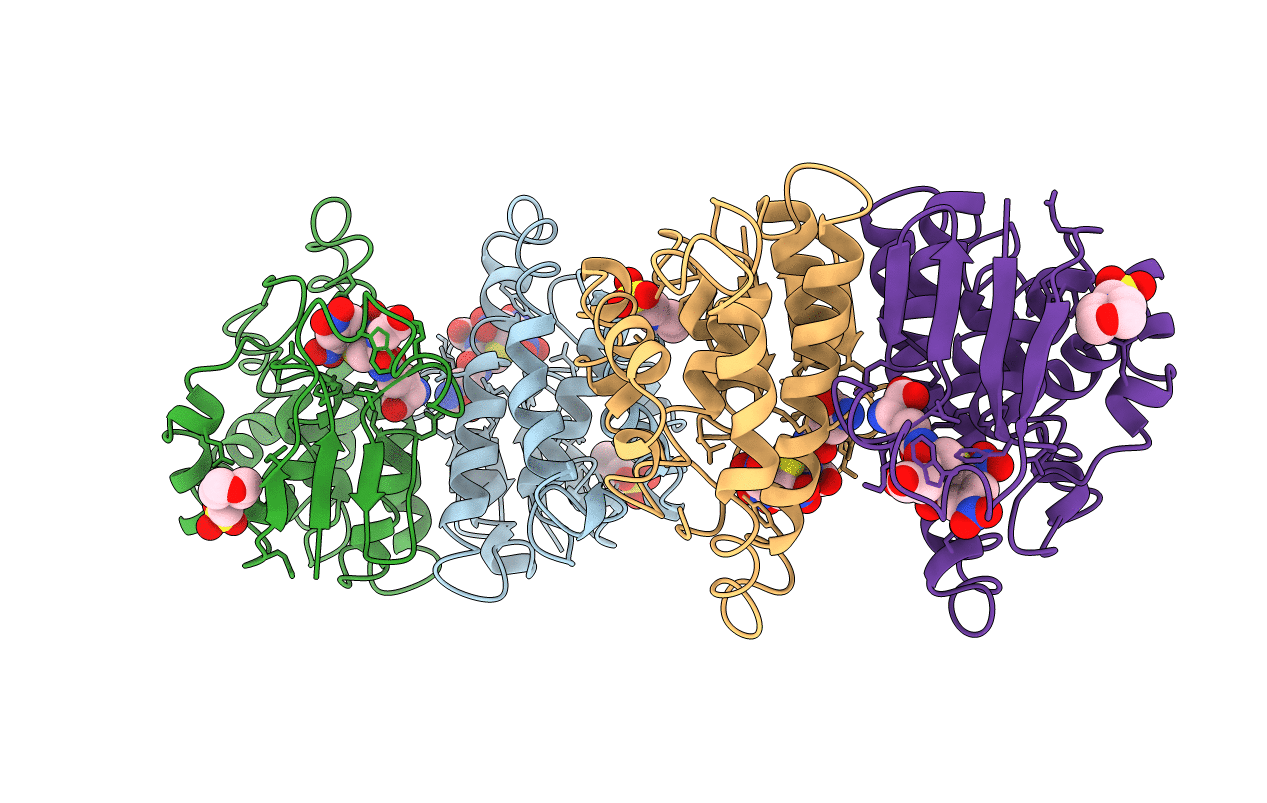
We have solved the structures of the pi class GST hP1-1 in complex with its substrate, glutathione, a transition-state complex, the Meisenheimer complex, and an inhibitor, S-(rho-bromobenzyl)-glutathione, and refined them to resolutions of 1.8 A, 2.0 A and 1.9 A, respectively. All ligand molecules are well-defined in the electron density. In all three structures, an additionally bound N-morpholino-ethansulfonic acid molecule from the buffer solution was found.
CONCLUSIONS
In the structure of the GST-glutathione complex, two conserved water molecules are observed, one of which hydrogen bonds directly to the sulphur atom of glutathione and the other forms hydrogen bonds with residues around the glutathione-binding site. These water molecules are absent from the structure of the Meisenheimer complex bound to GST, implicating that deprotonation of the cysteine occurs during formation of the ternary complex which involves expulsion of the inner bound water molecule. The comparison of our structures with known mu class GST structures show differences in the location of the electrophile-binding site (H-site), explaining the different substrate specificities of the two classes. Fluorescence measurements are in agreement with the position of the N-morpholino-ethansulfonic acid, close to Trp28, identifying a possible ligandin-substrate binding site.