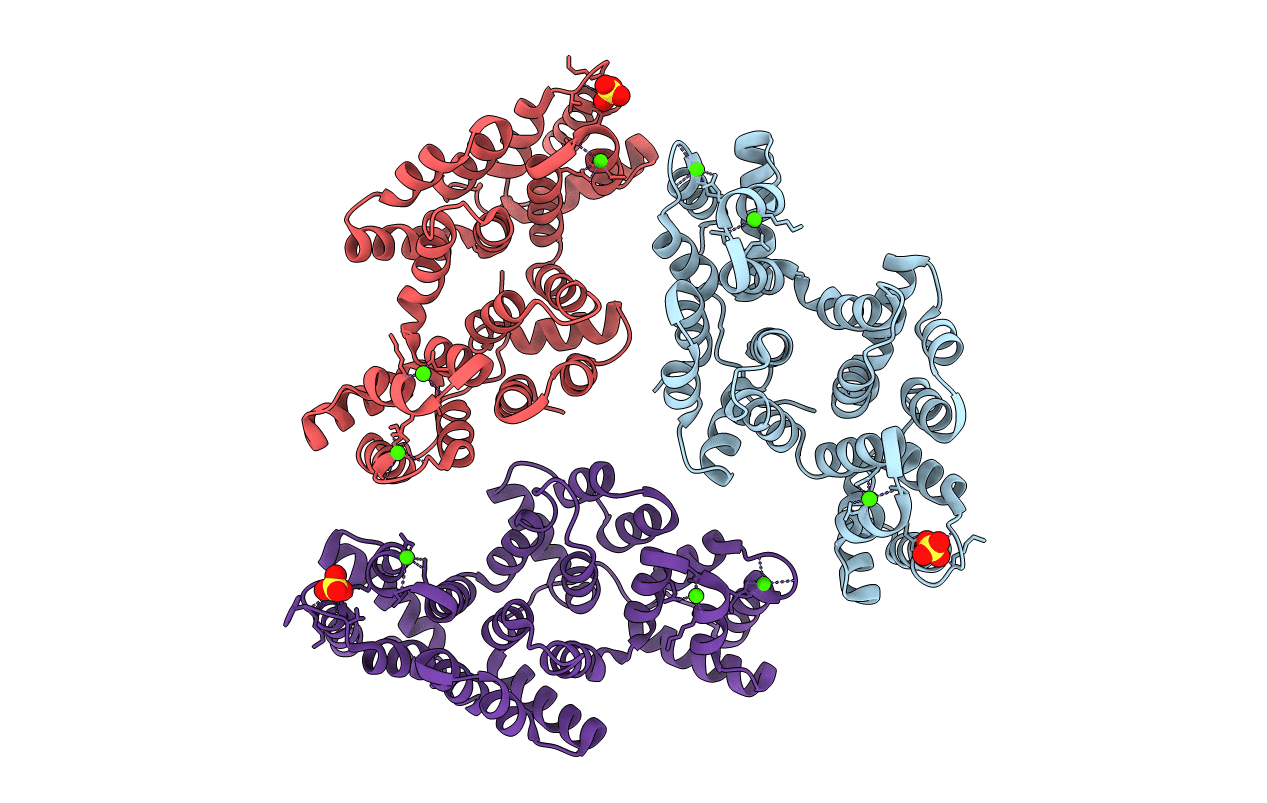
1ANX image
Deposition Date 1993-10-26
Release Date 1994-12-20
Last Version Date 2024-02-07
Entry Detail
PDB ID:
1ANX
Title:
THE CRYSTAL STRUCTURE OF A NEW HIGH-CALCIUM FORM OF ANNEXIN V
Biological Source:
Source Organism:
Homo sapiens (Taxon ID: 9606)
Host Organism:
Method Details:
Experimental Method:
Resolution:
1.90 Å
R-Value Observed:
0.19
Space Group:
P 1
Macromolecular Entities
Structures with similar UniProt ID
Protein Blast
Polymer Type:polypeptide(L)
Molecule:ANNEXIN V
Gene (Uniprot):ANXA5
Chain IDs:A, B, C
Chain Length:319
Number of Molecules:3
Biological Source:Homo sapiens
Primary Citation
The crystal structure of a new high-calcium form of annexin V.
J.Mol.Biol. 234 816 825 (1993)
PMID: 8254674 DOI: 10.1006/jmbi.1993.1627

Abstact

Annexin V was crystallized in the presence of a high concentration of calcium and the structure refined at 1.9 A resolution. The crystals are triclinic (P1) with three molecules per asymmetric unit and pseudo-R3 symmetry, reflecting a tendency of annexin to form trimers. The overall structure of the protein is similar to that seen in other crystal forms. There are, however, significant changes in domain III, where a new calcium site is formed. The whole region surrounding this site is reorganized in our structure, rendering annexin V more symmetrical and more alike annexin I. The formation of the new calcium site causes the displacement of Trp187 from a buried to an exposed conformation, a change that has recently been demonstrated by fluorescence measurements. The affinity of the different potential calcium sites is modulated: there is no calcium bound in domains II and IV, while up to two secondary calcium ions sites (in domains I and III) can substitute, depending on the calcium concentration present. We suggest that annexin can act as a calcium buffer, binding or releasing calcium depending on its local concentration. Our results also show that annexin displays inherent mobility which, together with its capacity to modulate the calcium affinity of its sites, can be of importance for its function on the membrane surface.

Legend

Protein

Chemical

Disease

Primary Citation of related structures
Feedback Form
Name
Email
Institute
Feedback