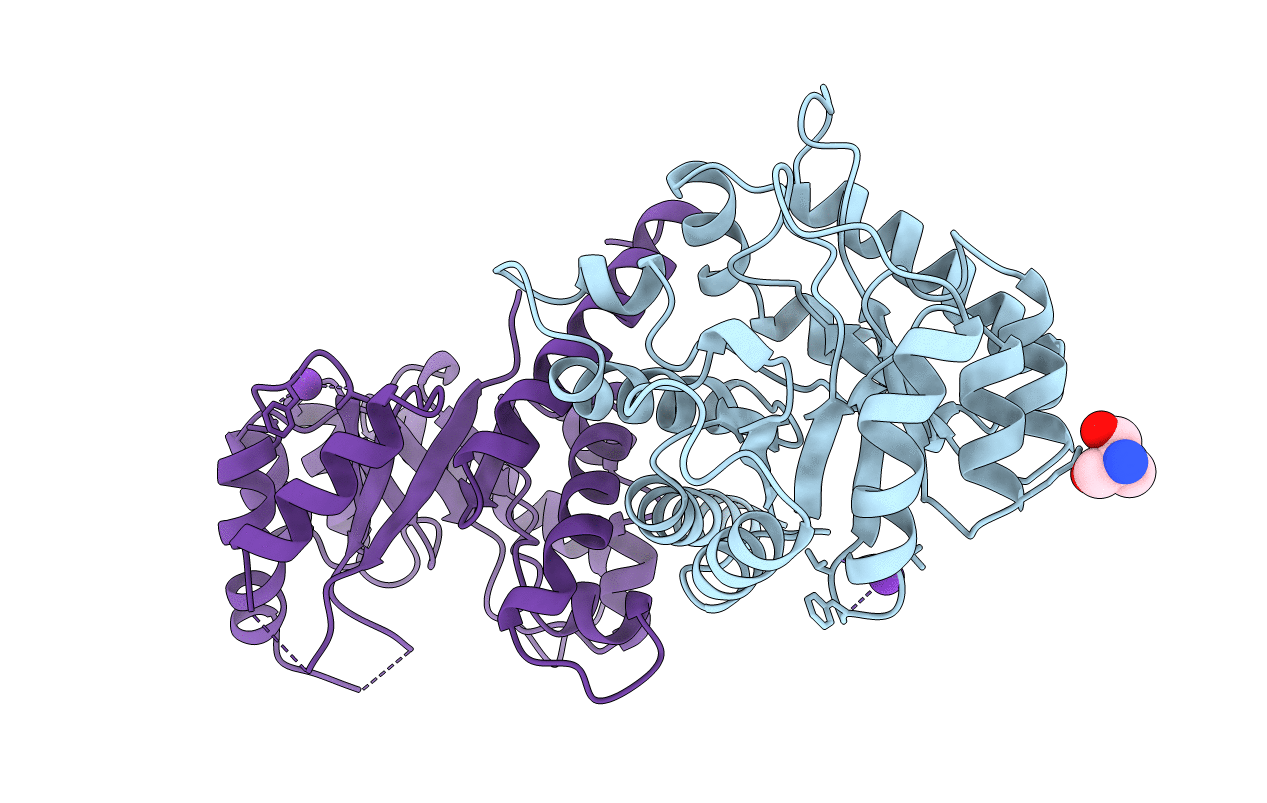
1AD1 image
Deposition Date 1997-02-19
Release Date 1998-04-29
Last Version Date 2024-02-07
Entry Detail
PDB ID:
1AD1
Keywords:
Title:
DIHYDROPTEROATE SYNTHETASE (APO FORM) FROM STAPHYLOCOCCUS AUREUS
Biological Source:
Source Organism:
Method Details:
Experimental Method:
Resolution:
2.20 Å
R-Value Free:
0.21
R-Value Work:
0.15
R-Value Observed:
0.15
Space Group:
P 1 21 1

Macromolecular Entities
Structures with similar UniProt ID
Protein Blast
Polymer Type:polypeptide(L)
Molecule:DIHYDROPTEROATE SYNTHETASE
Gene (Uniprot):folP
Chain IDs:A, B
Chain Length:266
Number of Molecules:2
Biological Source:Staphylococcus aureus
Primary Citation
Structure and function of the dihydropteroate synthase from Staphylococcus aureus.
J.Mol.Biol. 268 21 30 (1997)
PMID: 9149138 DOI: 10.1006/jmbi.1997.0944

Abstact

The gene encoding the dihydropteroate synthase of staphylococcus aureus has been cloned, sequenced and expressed in Escherichia coli. The protein has been purified for biochemical characterization and X-ray crystallographic studies. The enzyme is a dimer in solution, has a steady state kinetic mechanism that suggests random binding of the two substrates and half-site reactivity. The crystal structure of apo-enzyme and a binary complex with the substrate analogue hydroxymethylpterin pyrophosphate were determined at 2.2 A and 2.4 A resolution, respectively. The enzyme belongs to the group of "TIM-barrel" proteins and crystallizes as a non-crystallographic dimer. Only one molecule of the substrate analogue bound per dimer in the crystal. Sequencing of nine sulfonamide-resistant clinical isolates has shown that as many as 14 residues could be involved in resistance development. The residues are distributed over the surface of the protein, which defies a simple interpretation of their roles in resistance. Nevertheless, the three-dimensional structure of the substrate analogue binary complex could give important insight into the molecular mechanism of this enzyme.

Legend

Protein

Chemical

Disease

Primary Citation of related structures
Feedback Form
Name
Email
Institute
Feedback