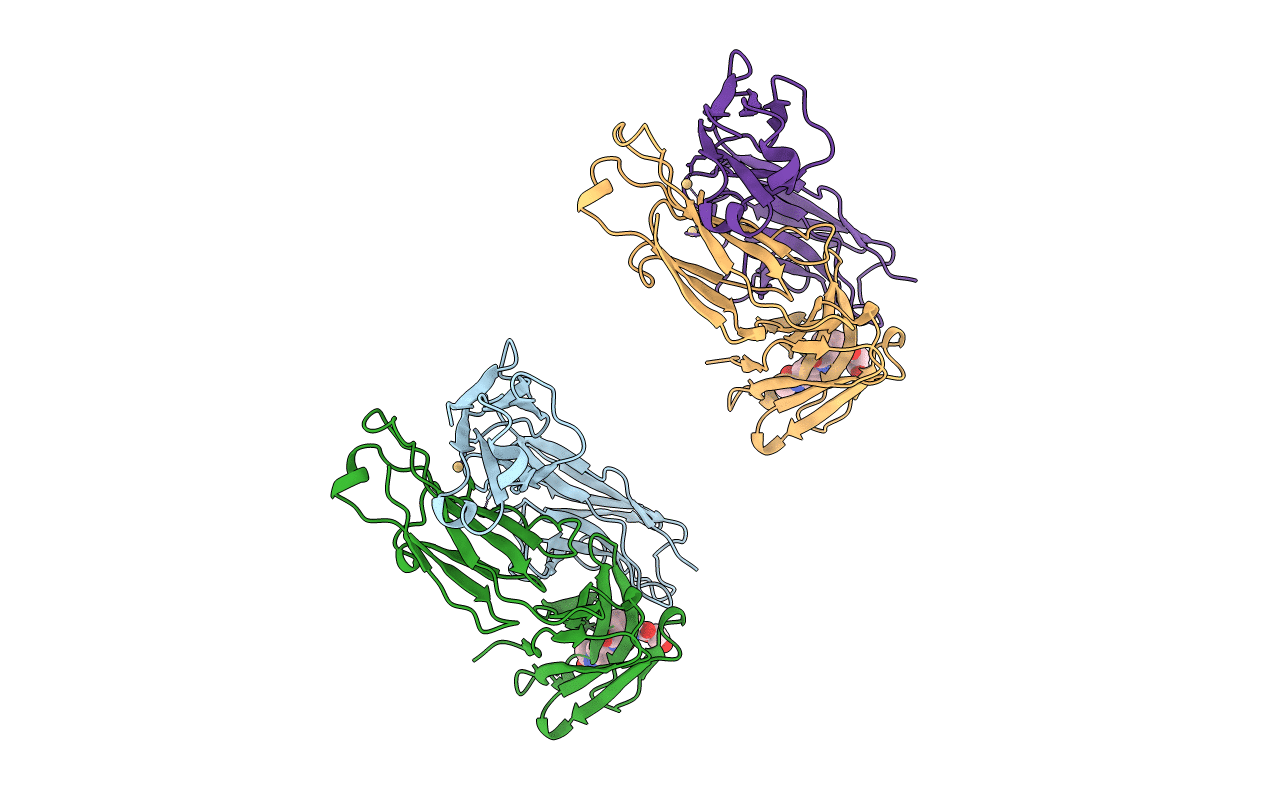
1A4K image
Deposition Date 1998-01-30
Release Date 1998-05-13
Last Version Date 2024-10-23
Entry Detail
PDB ID:
1A4K
Keywords:
Title:
DIELS ALDER CATALYTIC ANTIBODY WITH TRANSITION STATE ANALOGUE
Biological Source:
Source Organism:
Mus musculus (Taxon ID: 10090)
Host Organism:
Method Details:
Experimental Method:
Resolution:
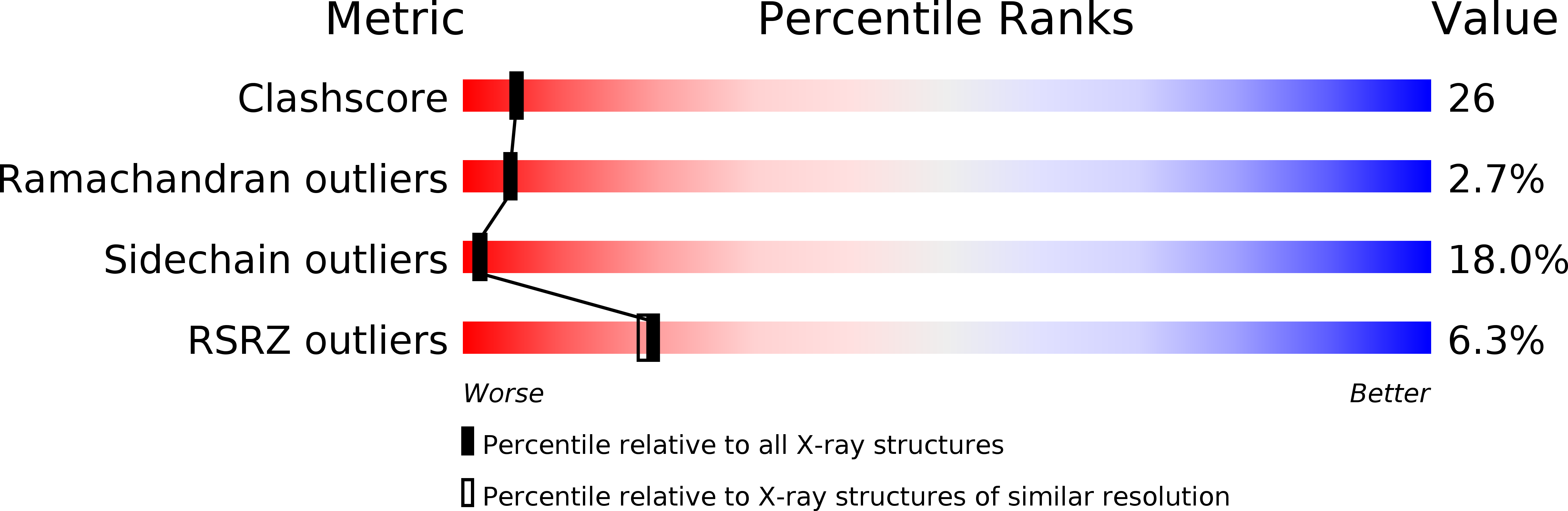
2.40 Å
R-Value Free:
0.29
R-Value Work:
0.21
R-Value Observed:
0.21
Space Group:
P 21 21 21
Macromolecular Entities
Polymer Type:polypeptide(L)
Molecule:ANTIBODY FAB
Chain IDs:B (auth: H), D (auth: B)
Chain Length:219
Number of Molecules:2
Biological Source:Mus musculus
Structures with similar UniProt ID
Protein Blast
Polymer Type:polypeptide(L)
Molecule:ANTIBODY FAB
Gene (Uniprot):IGKC
Chain IDs:A (auth: L), C (auth: A)
Chain Length:217
Number of Molecules:2
Biological Source:Mus musculus
Primary Citation
Immunological origins of binding and catalysis in a Diels-Alderase antibody.
Science 279 1929 1933 (1998)
PMID: 9506942 DOI: 10.1126/science.279.5358.1929

Abstact

The three-dimensional structure of an antibody (39-A11) that catalyzes a Diels-Alder reaction has been determined. The structure suggests that the antibody catalyzes this pericyclic reaction through a combination of packing and hydrogen-bonding interactions that control the relative geometries of the bound substrates and electronic distribution in the dienophile. A single somatic mutation, serine-91 of the light chain to valine, is largely responsible for the increase in affinity and catalytic activity of the affinity-matured antibody. Structural and functional studies of the germ-line precursor suggest that 39-A11 and related antibodies derive from a family of germ-line genes that have been selected throughout evolution for the ability of the encoded proteins to form a polyspecific combining site. Germ line-encoded antibodies of this type, which can rapidly evolve into high-affinity receptors for a broad range of structures, may help to expand the binding potential associated with the structural diversity of the primary antibody repertoire.

Legend

Protein

Chemical

Disease

Primary Citation of related structures
Feedback Form
Name
Email
Institute
Feedback