13MJ image
Deposition Date 2025-09-17
Release Date 2026-02-18
Last Version Date 2026-02-18
Entry Detail
PDB ID:
13MJ
Keywords:
Title:
PanDDA analysis group deposition -- Crystal structure of PLpro-C111S in complex with Fr13647
Biological Source:
Expression System(s):
Method Details:
Experimental Method:
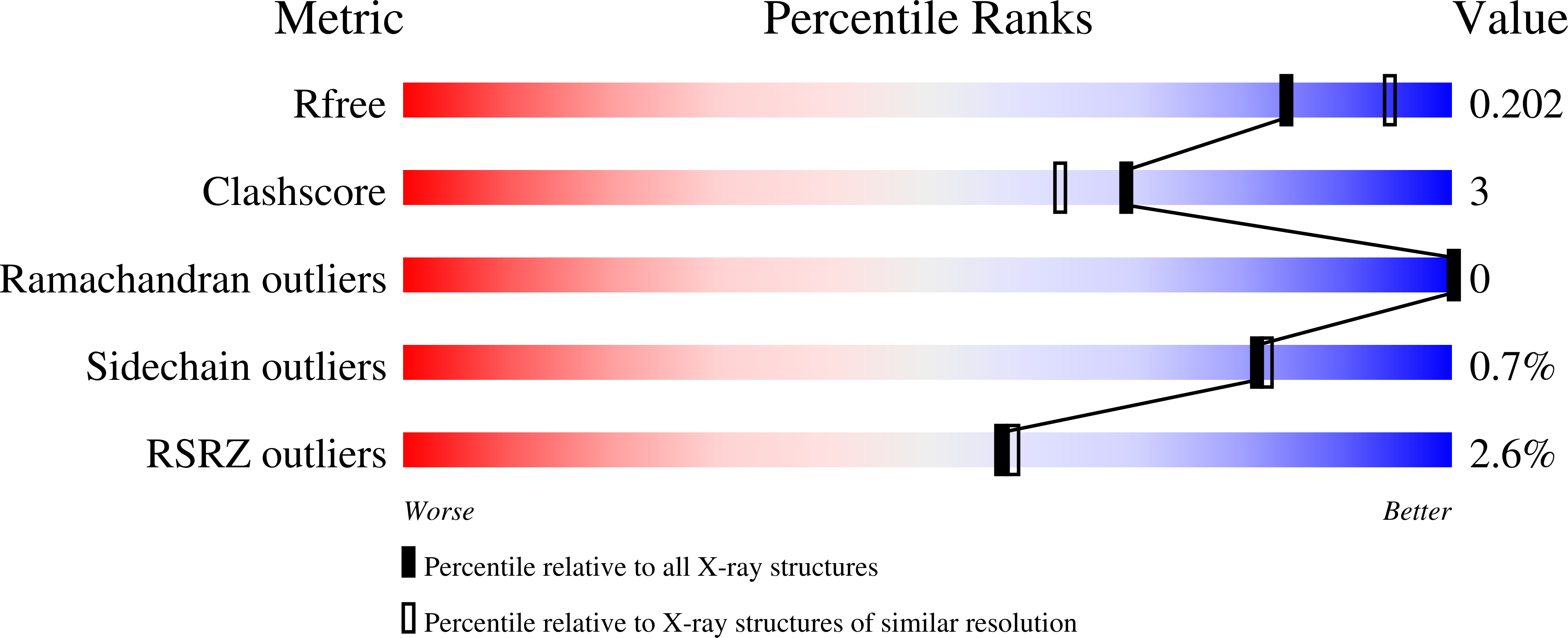
Resolution:
2.06 Å
R-Value Free:
0.20
R-Value Work:
0.17
R-Value Observed:
0.17
Space Group:
P 32 2 1
Macromolecular Entities
Structures with similar UniProt ID
Protein Blast
Polymer Type:polypeptide(L)
Molecule:Papain-like protease nsp3
Gene (Uniprot):rep
Mutagens:C111S
Chain IDs:A
Chain Length:354
Number of Molecules:1
Biological Source:Severe acute respiratory syndrome coronavirus 2
Primary Citation
Crystallographic fragment screening discovers novel micromolar active inhibitors and druggable hotspots of SARS-CoV-2 PL pro.
Int.J.Biol.Macromol. 347 150689 150689 (2026)
PMID: 41638277 DOI: 10.1016/j.ijbiomac.2026.150689

Abstact

The COVID-19 pandemic has highlighted the need to develop broad-spectrum antiviral therapeutics targeting rapidly evolving coronaviruses. This research focuses on SARS-CoV-2 PLpro, a conserved viral protease that plays dual roles in viral polyprotein processing and host immune suppression. Using an integrated fragment-based drug discovery (FBDD) approach that combines high-throughput X-ray crystallography and biochemical assays, we systematically screened a diverse library of 800 fragment compounds. Structural characterization identified 129 validated binders occupying 12 distinct binding sites on PLpro. Remarkably, two fragments demonstrated potent micromolar inhibitory activity. Fr12895 inhibited SARS-CoV-2 PLpro protease activity (IC50 = 8.013 μM), as measured using the fluorogenic substrate RLRGG-AMC, while Fr12338 showed inhibition against PLpro deISGylase activity (IC50 = 4.5 μM), as determined with the substrate Ac-ISG15prox-Rh110MP. This provides a case for directly obtaining micromolar-active compounds through crystallographic fragment screening of a small number of random compounds. Detailed structural analysis revealed these fragments engage key functional regions including the blocking loop 2 (BL2) and ubiquitin/ISG15 binding interface through extensive hydrogen-bond networks and hydrophobic interactions. Our study reveals novel micromolar active inhibitors and druggable sites of SARS-CoV-2 PLpro by crystallographic fragment screening, provides crucial scaffold and a structural roadmap for developing broad-spectrum antivirals against coronaviruses.

Legend

Protein

Chemical

Disease

Primary Citation of related structures
Feedback Form
Name
Email
Institute
Feedback